

Forming Faith Where It Happens: Dr. Michael Mauriello and the Future of Youth Discipleship
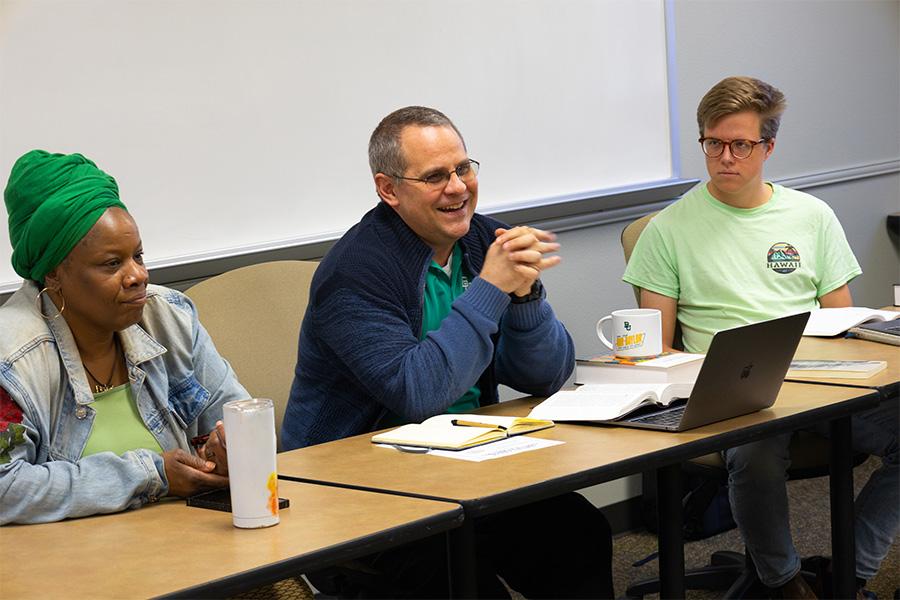
At Truett Seminary, faculty scholarship remains deeply connected to the life of the Church. It is shaped by close attention to congregational life—something few embody more clearly than Michael Mauriello, PhD, clinical associate professor of youth and family ministry at Truett Seminary. His work grows not not only from theological reflection, but from a genuine curiosity about the lived realities of ministry, particularly in the often overlooked rhythms of youth discipleship. Rather than assuming that current models of relational discipleship fully capture how teenagers are formed, Mauriello asks a more basic question: What is actually happening in youth group life week after week? At the heart of his work is the simple but pressing conviction that we do not yet see clearly enough what is happening in these spaces, and until we do, our efforts to form faithful disciples will remain incomplete.
This conviction has taken shape in a collaborative research project with Stephanie Berglund of LeTourneau University. Together, they have begun to trace the contours of youth ministry in East Texas by visiting fifteen churches, observing youth gatherings, and listening closely to students through focus groups. What emerges is more than description, it is the beginning of thoughtful, theological reflection on how young people are being shaped in one of the most culturally embedded regions of American Christianity. Their ongoing work, envisioned in a future project tentatively titled Wednesday Night Lights, seeks to name both the strengths and the gaps within current youth ministry practices. While the scope is necessarily limited, Mauriello and Berglund approach the work with patience and humility, aiming not to generalize too quickly, but to notice patterns, ask better questions, and broaden the conversation to include more diverse church contexts. At stake are central questions for the Church: what kind of disciples are we actually forming, and how does that align with the life and calling of Christ?
This same concern carries naturally into Mauriello’s teaching at Truett. East Texas, situated in the heart of the Bible Belt, offers a revealing window into how theology and everyday ministry intersect. By bringing his research into the classroom, Mauriello invites students not simply to adopt existing models of ministry, but to examine them carefully and thoughtfully. He encourages future pastors to consider what they hope their communities, and especially their young people, will come to know, to become, and to embody, and whether their current practices truly nurture that vision. His broader interest in associate pastors reflects a similar pastoral attentiveness, recognizing the vital yet often underappreciated role of those who serve in supporting leadership. In all of this, Mauriello’s work is guided by a desire to help the Church see itself more clearly, so that its life together might more faithfully reflect the gospel it proclaims.